We Built a Reliable Cloud-Native DevOps Environment to Support ApplyWyse’s Growing AI-Powered Job Search Platform
Overview
ApplyWyse is an AI-powered job application tracking platform created to help job seekers organize and optimize their application process from a single workspace.
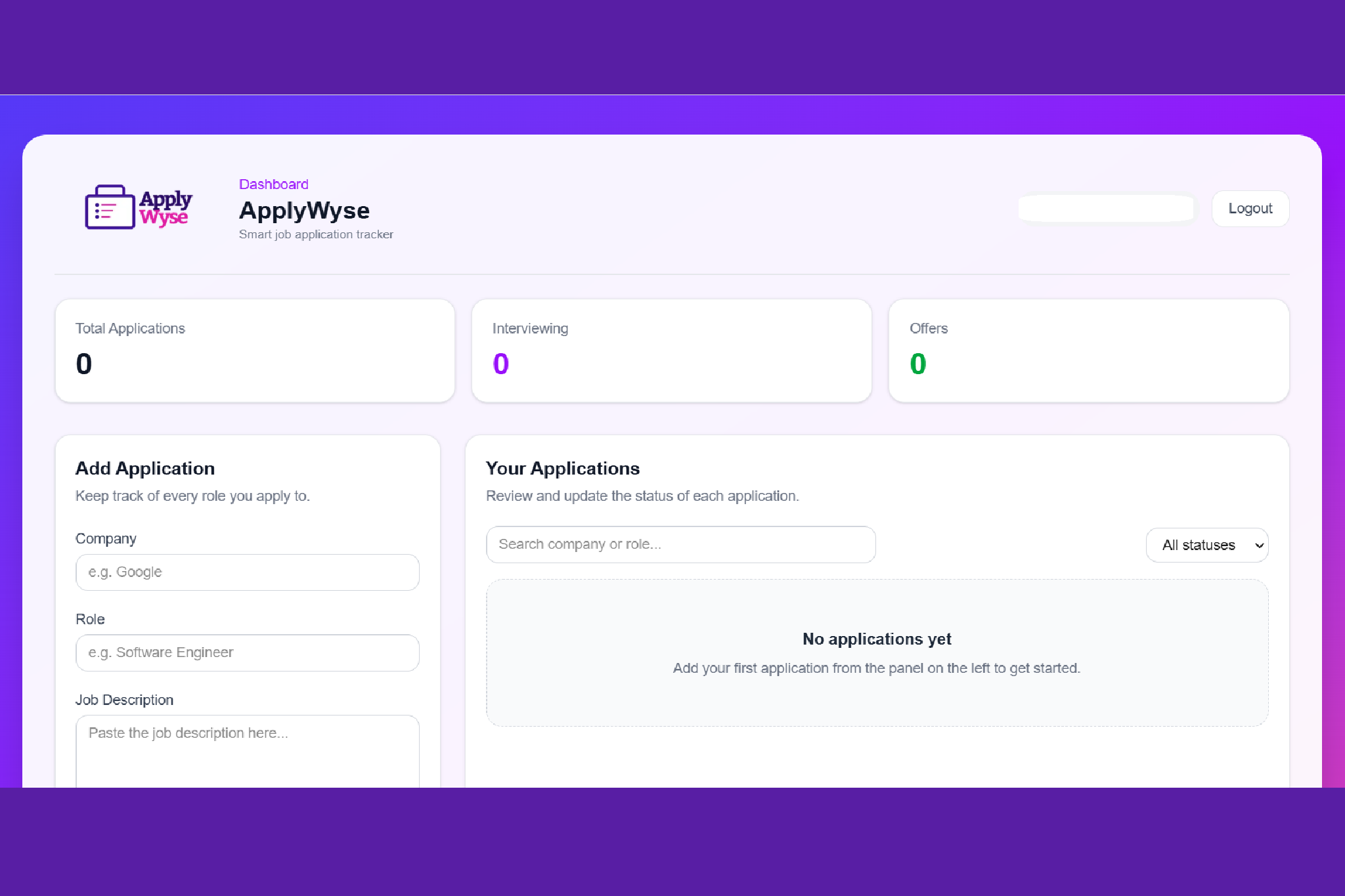
As the platform evolved, the need for a more scalable, reliable, and maintainable infrastructure became increasingly important. The application handled multiple interconnected workflows including job tracking, AI-generated interview preparation, document storage, and user activity management.
To support growth and improve deployment reliability, iSite Digitals was engaged to design and manage a modern cloud and DevOps environment tailored for scalability, performance, and operational efficiency.
The Situation
During early development stages, the platform infrastructure was functional but increasingly difficult to manage efficiently as features expanded.
The system required:
- more reliable deployment workflows
- better environment consistency
- centralized monitoring
- scalable backend infrastructure
- simplified maintenance processes
- stronger operational visibility
As new AI-powered features were introduced, maintaining stability while continuing rapid development became a key priority.
Initial Discovery & Planning
The engagement began with several planning and architecture review sessions involving:
- infrastructure assessment
- deployment workflow analysis
- environment management review
- scaling considerations
- maintenance planning
- monitoring requirements
The goal was not only to improve deployments, but also to create an infrastructure foundation capable of supporting future platform growth.
Infrastructure & DevOps Implementation
iSite Digitals designed and implemented a cloud-native DevOps environment focused on automation, maintainability, and operational reliability.
The implementation included:
Cloud Infrastructure Setup
- cloud server provisioning
- secure networking configuration
- environment separation for development and production
- scalable backend service deployment
Containerization
Application services were containerized to ensure consistency across environments and simplify deployments.
CI/CD Automation
Automated deployment pipelines were introduced to reduce manual deployment processes and improve release reliability.
This allowed updates to move through testing and deployment workflows more efficiently.
Monitoring & Visibility
System monitoring and logging tools were configured to provide visibility into:
- application performance
- service health
- resource utilization
- deployment activity
- operational alerts
Maintenance & Operational Support
Ongoing maintenance processes were established for:
- infrastructure updates
- deployment monitoring
- issue troubleshooting
- service optimization
- operational stability
Operational Improvements
Following implementation, the platform gained a more structured and reliable operational environment.
Key improvements included:
- faster deployment workflows
- reduced manual configuration work
- improved service stability
- better infrastructure visibility
- more organized environment management
- simplified maintenance operations
The development workflow also became significantly smoother due to improved deployment consistency across environments.
Collaboration & Working Process
The project involved continuous collaboration between engineering and platform stakeholders.
Activities throughout the engagement included:
- infrastructure planning discussions
- deployment testing sessions
- architecture reviews
- monitoring configuration walkthroughs
- troubleshooting sessions
- operational maintenance coordination
Rather than treating infrastructure as a one-time setup, the engagement focused on building sustainable operational processes around the platform.
Technologies & Tools Used

AWS
Terraform
Docker

Jerkins
Kubernetes

Prometheus